What Melanoma Really Looks Like: A Practical Visual Guide to Spotting Skin Cancer Early
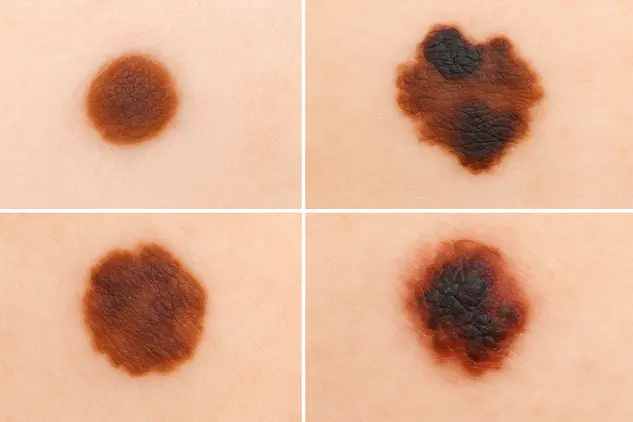
Melanoma can be sneaky—but catching it early saves lives. This visual-style guide explains how melanoma looks on different skin tones and body areas, the proven ABCDE rule, advanced clues dermatologists use, and practical steps you can take today to protect yourself and your family.
Key takeaways
– Melanoma often looks like a changing or unusual spot, not always dark or dramatic.
– Use the ABCDE rule and the “Ugly Duckling” sign to flag suspicious moles.
– Check your whole skin monthly, including scalp, nails, and soles.
– See a dermatologist promptly for any changing, new, or odd spot—especially one that itches, bleeds, or grows.
Why early detection matters
– When found early (Stage I), melanoma is typically curable with surgery and has a very high 5‑year survival rate.
– As melanoma grows deeper or spreads to lymph nodes or organs, treatment becomes more complex. Early checks truly make the difference.
Quick answer: What does melanoma look like?
There is no single “melanoma look.” It can be flat or raised; brown, black, blue, pink, red, or skin-colored; small or larger than a pencil eraser. The key pattern is change—especially a spot that looks different from your other moles or evolves in color, shape, size, or symptoms (itching, bleeding, crusting).
The ABCDE rule of melanoma (with real-world cues)
Use ABCDE as a fast screen when you notice a mole or spot.
– A — Asymmetry: One half doesn’t match the other. Imagine folding the spot in half—do the sides line up? If not, be cautious.
– B — Border: Edges are irregular, ragged, notched, or blurred. Benign moles usually have smooth, even borders.
– C — Color: Uneven color with multiple shades—tan, brown, black, blue, gray, red, or white areas. Sudden color change is a red flag.
– D — Diameter/“Dark”: Larger than 6 mm (pencil eraser) raises suspicion, but small melanomas exist. Also watch for a spot darker than your others.
– E — Evolving: Any change in size, shape, color, elevation, or new symptoms like itching, tenderness, crusting, or bleeding. E for “extra attention.”
Beyond ABCDE: Dermatologist-backed clues you shouldn’t miss
– The Ugly Duckling sign: One mole looks different from your others (bigger, darker, lighter, or just “odd”). Trust that instinct.
– The 3 Rs for nodular melanoma: Red, Raised, and Rapidly growing. These can be smooth, dome-shaped, and may bleed.
– New after 30: A brand-new mole in adulthood, especially if changing, warrants a professional look.
– “Pimple” that won’t heal: A pink or skin-colored bump that persists more than 3–4 weeks—don’t ignore it.
– Symptoms count: Itching, tenderness, bleeding, or a scab that cycles and returns.
How melanoma looks on different skin tones
Melanoma can occur in every skin tone. On deeper skin tones, it’s more likely to appear in less sun-exposed sites.
– Darker skin: Look closely at palms, soles, around or under nails, and on mucous membranes. Spots may look dark brown, gray, or black but can also be pink or skin-colored.
– Fair skin: Any new or changing mole—especially with variegated colors or irregular edges—deserves attention. Freckle-heavy skin can make the Ugly Duckling sign particularly helpful.
Common types of melanoma and visual cues
– Superficial Spreading Melanoma (most common): Often flat or slightly raised with uneven borders and color variation (brown, black, tan, sometimes red or blue). Tends to spread across the skin’s surface first.
– Nodular Melanoma: Usually raised, dome-shaped, and can be black, blue-black, red, or skin-colored. Often grows quickly and may bleed. Remember the 3 Rs (Red, Raised, Rapidly growing).
– Lentigo Maligna Melanoma: Typically appears on sun-damaged faces of older adults. Starts as a flat, slowly expanding patch with irregular borders and mixed browns; can develop darker or raised areas over time.
– Acral Lentiginous Melanoma: Appears on palms, soles, or under nails. On the nail, it may show as a dark streak that widens, with pigment extending onto the skin next to the nail (Hutchinson’s sign). More common in people with darker skin but can affect anyone.
– Amelanotic Melanoma: Lacks the typical dark pigment—may appear pink, red, or skin-colored. These are easy to mistake for a bug bite or pimple; watch for non-healing, growing, or bleeding lesions.
Hard-to-spot locations (and what to look for)
– Scalp: Part hair in sections; use a mirror or ask for help. Look for new or changing spots, sores that don’t heal, or bleeding bumps.
– Ears and neck: Check tops and backs of ears; sun-exposed areas may show flat, irregular patches.
– Under nails: Watch for a dark band that extends to the cuticle or skin fold (Hutchinson’s sign), a band that widens over time, or nail splitting not tied to injury.
– Palms/soles: Irregular dark patches or streaks that slowly grow. Don’t dismiss a “bruise” that lingers for weeks without improvement.
– Eyes: Though rare, ocular melanoma can cause vision changes or dark spots on the iris. Report new visual symptoms to an eye doctor.
– Genital/mucosal areas: Any persistent, changing spot in the mouth, genital, or anal area should be evaluated—don’t wait out of embarrassment.
Who is at higher risk?
Anyone can develop melanoma, but risk rises if you have:
– History of intense sunburns, especially blistering burns
– Tanning bed use (even a few sessions increase risk)
– Fair skin, light eyes, red or blond hair, or many moles (especially atypical/dysplastic moles)
– Family or personal history of melanoma or certain skin cancers
– A weakened immune system (from illness or medications)
– High UV exposure due to outdoor work or recreation
Self-skin exam: a 10-minute monthly routine
1) Set up: Good lighting, full-length mirror, handheld mirror, and your phone for photos.
2) Head and scalp: Check face, nose, lips, and ears (front and back). Part hair in sections or use a blow-dryer to expose the scalp.
3) Torso: Inspect neck, chest (under breasts or pecs), abdomen, and sides. For breasts, lift to see the fold beneath.
4) Arms and hands: Look at forearms, elbows, upper arms, palms, and backs of hands. Spread fingers; check between fingers and under nails.
5) Back and buttocks: Use the handheld mirror or ask a partner; scan the back of the neck, shoulders, upper/lower back, and buttocks.
6) Legs and feet: Front and back of thighs, calves, shins; tops and soles of feet; between toes and under toenails; heels.
7) Track changes: Photograph any spot you’re watching, with a ruler or coin for scale. Re-take monthly to spot subtle changes.
When to call a dermatologist
– Any ABCDE or Ugly Duckling features
– A brand-new mole in adulthood
– A spot that grows, changes, itches, bleeds, crusts, or won’t heal after 3–4 weeks
– A dark nail streak that widens or spreads beyond the nail
– A “bruise” on a sole or palm that doesn’t fade
If you’re unsure, err on the side of checking. A quick visit can provide peace of mind—and timely treatment if needed.
What to expect at the appointment
– History and exam: Your clinician will review your concerns and examine your skin, sometimes with a dermatoscope (a specialized magnifying light).
– Biopsy if suspicious: A small sample is taken under local anesthesia and sent to a lab. This is the only way to diagnose melanoma.
– Next steps: If melanoma is confirmed, treatment often starts with a wider excision. Early melanomas are frequently cured with surgery alone. More advanced cases may involve lymph node evaluation and, when needed, targeted or immunotherapy—treatments that have improved outcomes considerably.
Prevention that actually works
– Daily sunscreen: Broad-spectrum SPF 30 or higher, even on cloudy days. Apply 15 minutes before going out; reapply every 2 hours and after swimming or sweating.
– Enough sunscreen: Use about a shot glass (1 oz/30 mL) to cover the body; a nickel-sized amount for the face and neck.
– Protective clothing: UPF-rated shirts, wide-brimmed hats, and UV-blocking sunglasses.
– Smart timing: Seek shade between 10 a.m. and 4 p.m., when UV is strongest.
– Skip tanning beds: They deliver concentrated UV and raise melanoma risk.
– Vitamin D safely: Get vitamin D from diet or supplements, not from sunburns.
Practical tips you can use today
– Create a “mole map”: Take clear, well-lit photos of your skin once, then update monthly for a side-by-side comparison.
– Use reminders: Add a recurring calendar alert for a 10-minute skin check on the first of each month.
– Buddy system: Ask a partner or friend to check hard-to-see areas like your back and scalp.
– Label your photos: Include the date and body area. Use a ruler or coin for scale.
– Know your normal: Spend 5 minutes learning what your usual moles look like so the Ugly Duckling stands out quickly.
– Pack a kit: Keep sunscreen, a hat, and sunglasses in your car or bag.
– After a sunburn: Set a follow-up reminder to check the area 4–6 weeks later for any new or changing spots.
– For runners and hikers: Don’t ignore friction zones (bra line, waistband, straps) where non-healing spots can hide.
– For people of color: Make palms, soles, and nails part of every exam—even if you rarely burn.
– Parents: Teach teens the ABCDEs and the dangers of tanning beds; help them do a quick check every few months.
Common look-alikes (and how they differ)
– Seborrheic keratoses: Waxy, “stuck-on” appearance; can be tan to dark brown. They often crumble or flake but don’t typically evolve like melanoma.
– Cherry angiomas: Bright red to purple domes made of blood vessels; usually very round and uniform.
– Dermatofibromas: Firm, dome-shaped bumps that may dimple when pinched; stable over time.
– Blue nevi: Deep blue-gray moles that are typically uniform in color and stable; any change should be evaluated.
When in doubt, check it out—only a biopsy can confirm what a spot really is.
Stronger conclusion: Your 30-day action plan
– Today: Do a head-to-toe check and take baseline photos of any moles or spots that catch your eye. Book a dermatology visit if anything meets ABCDE or feels like an Ugly Duckling.
– This week: Build a sun-safety kit (SPF 30+, hat, UPF shirt, sunglasses) and place it where you’ll use it—next to the door or in your bag.
– This month: Set a recurring reminder for a monthly skin exam. Ask a partner to help with scalp and back checks.
– This season: Replace old sunscreens, re-check areas that had sunburns, and review your photos for subtle changes.
Catching melanoma early is doable. With a 10-minute monthly habit and smart sun protection, you can drastically cut your risk and spot trouble early—when treatment is most effective.
Important note
This guide is for general education and does not replace medical advice. If you see a changing, new, or worrisome spot, schedule a professional skin exam. For more information, organizations like the American Academy of Dermatology and the American Cancer Society offer reliable, up-to-date resources.